
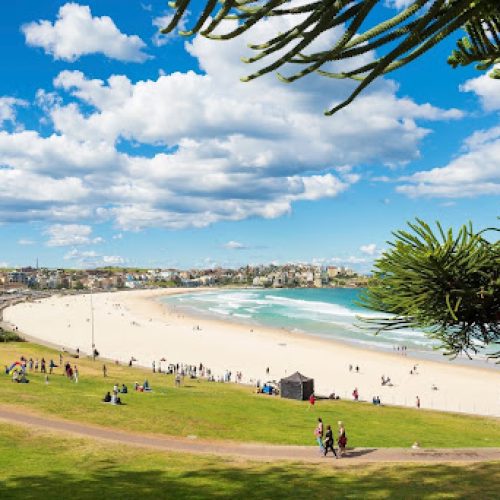
Sydney doesn’t just have a few good beaches — it has more than 100 of them, scattered across three very different stretches of coastline. Head north, and you’ll find long ocean beaches backed by national park. Go east, and you’re in postcard territory: Bondi, its neighbours, and the cliffside walk that ties them together. Drop south, and you’ll hit a run of beaches that, as of 2026, has been officially named the best in the entire country.
This guide is your starting point. Rather than a random top-ten, it’s organised the way Sydney actually divides itself — Northern, Eastern and Southern — so you can go deep on whichever stretch matches your trip, your mood, or your weekend.
How Sydney’s Beaches Break Down
Locals think of the coast in three segments, and it’s a genuinely useful way to plan a visit:
- Eastern Beaches — Bondi and its cluster (Bronte, Tamarama, Coogee, Clovelly), linked by the famous coastal walk
- Northern Beaches — Manly and the long run of surf beaches up toward Palm Beach
- Southern Beaches — Cronulla and Bate Bay, Sydney’s most under-rated stretch of sand
Each has its own personality, its own crowd, and its own reasons to visit. Here’s how they stack up.
Eastern Beaches: Bondi and the Coastal Walk
Bondi is the beach most visitors picture when they think of Sydney, and it earns the reputation. It’s a wide, golden crescent with reliable surf, packed cafes along Campbell Parade, and the Bondi Icebergs ocean pool carved into the rocks at its southern end.
What makes the Eastern Beaches special isn’t just Bondi on its own, though — it’s the cluster around it. The Bondi to Coogee coastal walk links Bondi to Tamarama (small, dramatic, popular with a younger crowd), Bronte (a locals’ favourite with a great rock pool and park), Clovelly (a sheltered, almost lagoon-like swim, good for families and snorkelling) and Coogee (broad, relaxed, with its own strip of restaurants). You could spend a full day walking the clifftops between all five and not run out of things to see.
Best for: first-time visitors, surfers, café culture, walkability without a car.
Northern Beaches: Manly and Beyond
Cross the harbour — by ferry, ideally, for the views of the Opera House and the bridge along the way — and Sydney feels like a different city. Manly Beach is Sydney’s top ocean beach for most tourists, and it’s the classic introduction to this stretch of the north side of the city. It’s got surf schools, a long promenade, and easy access via ferry from Circular Quay.
North of Manly, the beaches get progressively quieter and more spread out: Freshwater, Dee Why, Avalon, and eventually Palm Beach, the glamorous, laid-back stretch at the very tip of the peninsula. If you’re chasing something quieter still, keep an eye out for hidden harbour coves — pockets like Reef Beach, tucked between Manly and Mosman on the Spit to Manly walk, have recently been recognised by Lonely Planet as one of the best beaches in Australia for bushwalking, reachable only on foot or by water.
Best for: surf lessons, longer beach-hopping road trips, ferry-based day trips, quieter coves if you’re willing to walk.
Southern Beaches: Cronulla and Bate Bay
The Southern Beaches don’t get the same hype as Bondi or Manly, but 2026 changed that conversation. Cronulla is the only Sydney beach with its own dedicated train station, making it especially easy to reach from the city — around fifty minutes from Central, with the beach just a short walk from the platform.
More significantly, Tourism Australia’s Beach Ambassador named the Bate Bay stretch — a run of nine connected beaches including Cronulla, Wanda, Elouera and Oak Park — the best beach in the entire country for 2026. The judging covers five categories: natural condition and looks, safety, community feel, facilities and access, and weather patterns across the seasons. What sets it apart, according to the judging, is variety — you get sweeping open surf beaches alongside sheltered ocean pools within the same short stretch of coast.
If you’re only going to add one “under-the-radar” beach to your Sydney trip, Bate Bay is now the one with the official stamp of approval.
Best for: train-accessible day trips, variety in one spot, avoiding Bondi-level crowds.
Hidden and Quiet Beaches Worth Knowing About
If the big-name beaches feel too busy, Sydney has a genuine second layer of coves that stay quiet simply because they’re harder to get to — no direct road access, or only reachable by a walking track or boat. These are worth knowing about if you’ve already ticked off the obvious spots and want something calmer, particularly on a warm weekend when Bondi and Manly are at capacity.
When to Visit
Sydney beaches are swimmable most of the year thanks to a mild climate, but summer (December–February) brings the biggest crowds, warmest water, and busiest lifeguard patrols. Shoulder seasons — autumn and spring — often give you the best combination of good weather and manageable crowds. Winter is quieter still, and a genuinely good time to walk the coastal trails even if you’re not getting in the water.
Getting Around
You don’t need a car for most of this guide. The Eastern Beaches are linked by bus and a walkable coastal path. Manly is a ferry ride from Circular Quay. Cronulla has its own train line. A car only really becomes useful once you’re heading toward the more remote Northern Beaches stretches like Palm Beach and Avalon.
Where to Start
If this is your first trip, start Eastern: Bondi, then walk to Coogee, and you’ve covered five beaches and Sydney’s most famous view in a single afternoon. If you’ve done that before, Manly and the Northern Beaches are the natural next step. And if you want to see what’s actually rated the best beach in the country right now, it’s worth the train ride south to Bate Bay.
We’ll be building out a full guide to each of these beaches — things to do, where to eat, the best swim spots and family-friendly picks — one cluster at a time. Bondi’s full guide is up first.
Written by Scott Townsley Sydney